
Eye Advice
Dry Eye Awareness Month – January

Dry eye disease is a common yet often overlooked eye condition that affects millions of people worldwide. It occurs when your eyes don’t produce enough tears or when tears evaporate too quickly, leading to discomfort and vision problems.
Common dry eye symptoms include:
• Eye irritation, burning, or stinging
• Excessive watering
• Blurred or fluctuating vision
• A gritty or tired feeling in the eyes
These symptoms may seem minor at first, but they can significantly impact daily life. If left untreated, chronic dry eye can become persistent and harder to manage.
Book Your Dry Eye Assessment
This January, we’re inviting patients to take part in Dry Eye Awareness Month by booking a dedicated dry eye assessment. During your appointment, we will:
• Examine the eyelids and front surface of the eye.
• Measure the quality and stability of your tear film
• Identify underlying causes such as blocked meibomian glands or inflammation
• Recommend a personalised dry eye treatment plan, which may include lubricating eye drops, in-practice therapies, or lifestyle adjustments
Our goal is to provide long-term relief and help you maintain healthy, comfortable vision.
📞 Please call any of our practices to book your appointment.
Eye Advice
Eye Advice - Myopia Management

What is myopia (short-sightedness)?
Myopia typically starts in childhood and usually requires glasses or contact lenses to see clearly in the distance, for example when looking at a whiteboard at the front of a classroom.
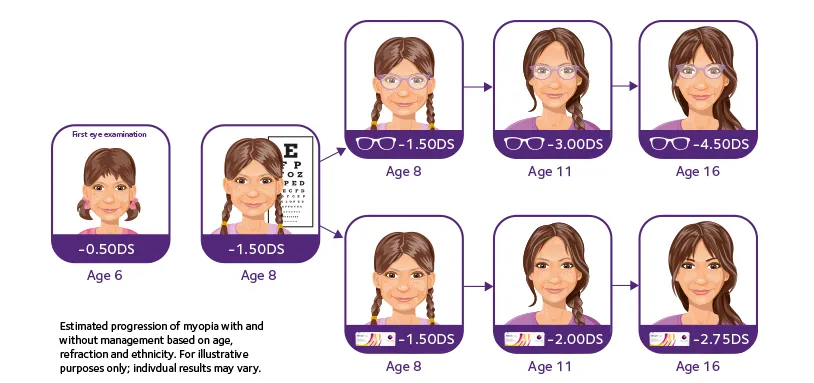
How myopia progresses.
Myopia usually progresses throughout childhood, often continuing through teenage years and sometimes into early adulthood. Myopia progression happens at a different rate for each child, so regular eye examinations are important to ensure they are wearing up-to-date glasses and contact lenses. Although glasses and contact lenses can help a person with myopia to see clearly, having myopia increases the risk of future eye health problems such as retinal detachments, glaucoma, and myopic maculopathy
Causes of myopia.
Myopia in childhood is most commonly caused by excessive eye growth. Certain factors make a child more likely to become myopic, such as:
1. Family history
Children who have myopic parents are more likely to become myopic themselves. In fact, if both parents have myopia, there's a 50% chance their children will become myopic too.
2. Too much time focusing on near tasks
Modern lifestyles mean we spend more time focusing our eyes on nearby objects such as phones and tablets. It is important to be mindful that activities such as computer use, reading and using smartphones increase the chance of developing myopia.
3. Not enough time outdoors
Spending more time outdoors may help delay the onset of myopia. Sunlight stimulates the production of dopamine within the eye, which is thought to protect against myopia development. Experts recommend a minimum of 10 hours outdoors each week - about 90 minutes a day
How can we help? - Myopia management

Although there is currently no cure for myopia, we are able to prescribe your child with contact lenses or spectacle lenses that may slow down the progression of myopia. With the aid of advanced instrumentation, our experienced optometrists will carefully monitor your child's myopia as they grow, advising suitable treatment tailored specifically for your child's visual needs and lifestyle.
Vikesh Chauhan BSc (Hons) MCOptom Prof Cert Med Ret - Lead Optometrist
Please mention Myopia management when booking your next appointment or ask for more information at any of our practices.