Examinations
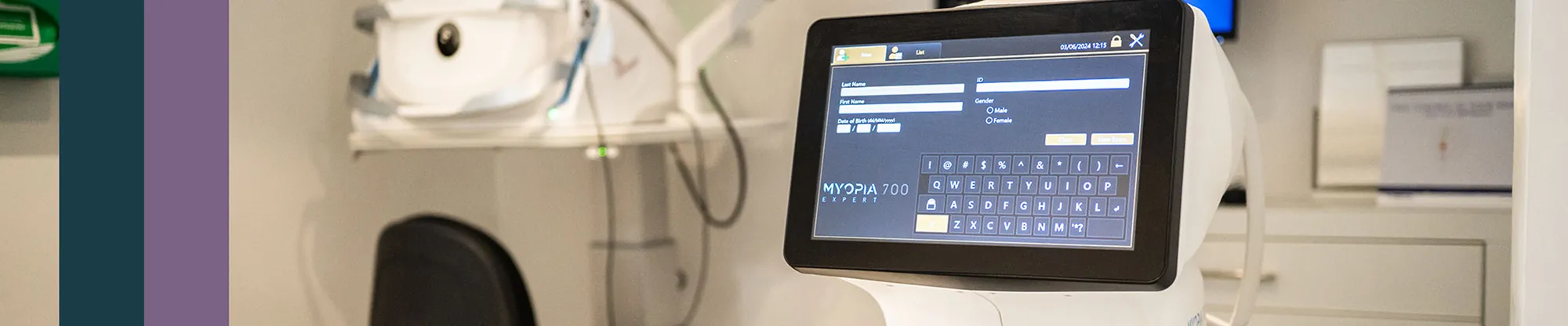
The eye examination is a thorough assessment that begins with gathering your medical and family history related to eye issues.
Your Optometrist conducts various tests to assess your eye health, vision, peripheral vision, eye pressure, and coordination between your eyes. We also screen for colour blindness, glaucoma, diabetes, and other health conditions. Additional tests may be conducted based on your specific requirements. Typically, an adult sight test appointment lasts between 25 to 35 minutes.
Your Optometrist will advise on how often you should have your eyes tested. For most people, it’s every two years but some groups of people may require an eye test more frequently, for example children or those with certain medical conditions. Eye examinations are accessible to everyone, regardless of age or specific needs. Many individuals qualify for a free sight test through the NHS, and we can provide guidance on this when you contact us.
We provide three levels of sight testing for all our patients. These include The Standard Eye Examination, which covers the comprehensive assessment described earlier. Additionally, we offer the Advanced option, which includes Optomap Retinal Photography, and the Advanced+ option, which includes Optomap Retinal Photography along with OCT scans.
The Advanced Examination – including all aspects of the Standard Eye Examination and Optomap Retinal Photography.
(Available at all of our practices)
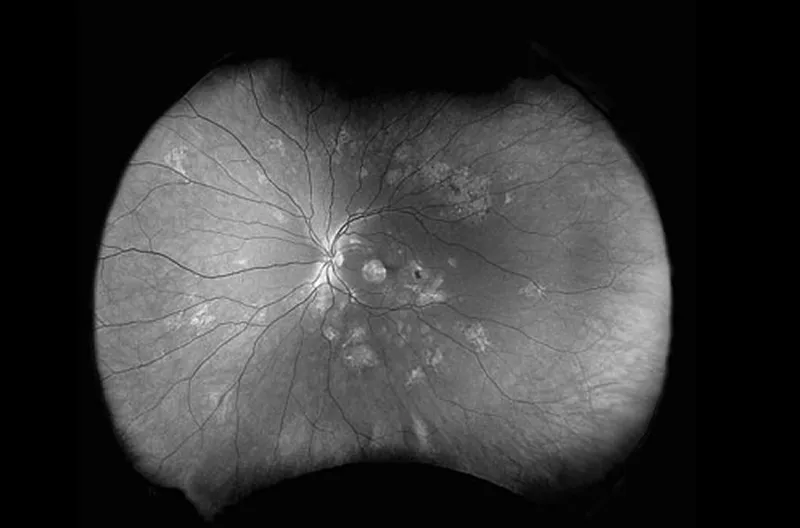
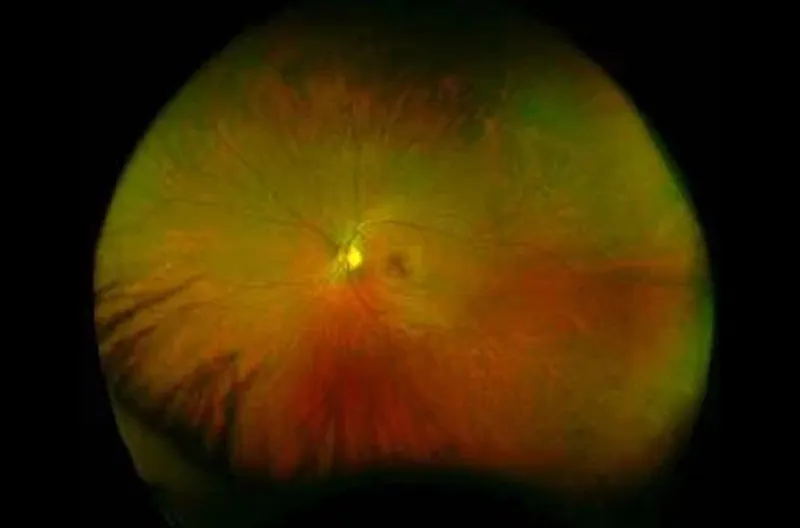
The Optomap exam is fast, painless and comfortable. Nothing touches your eye at any time. It is suitable for the whole family. To have the exam, you simply look into the device one eye at a time (like looking through a keyhole) and you will see a comfortable flash of light to let you know the image of your retina has been taken. Under normal circumstances, dilation drops are not necessary. The capture takes less than a second and images are available immediately for review.
The Optomap ultra-widefield retinal image is a unique technology that captures over 80% of your retina in one panoramic image while traditional imaging methods typically only show 15% of your retina at one time. Our optometrists recommend Optomap imaging with every sight test. Benefits include early protection from vision impairment or blindness and early detection of life-threatening diseases like cancer, stroke and cardiovascular disease. Early detection means successful treatments can be administered and reduces the risk to your sight and health.
The Advanced+ Examination – including all aspects of the Standard Eye Examination, Optomap Retinal Photography and the Optical Coherence Tomography scan (OCT).
( Available at our Blaby, Glenfield, Kibworth and Lutterworth practices)
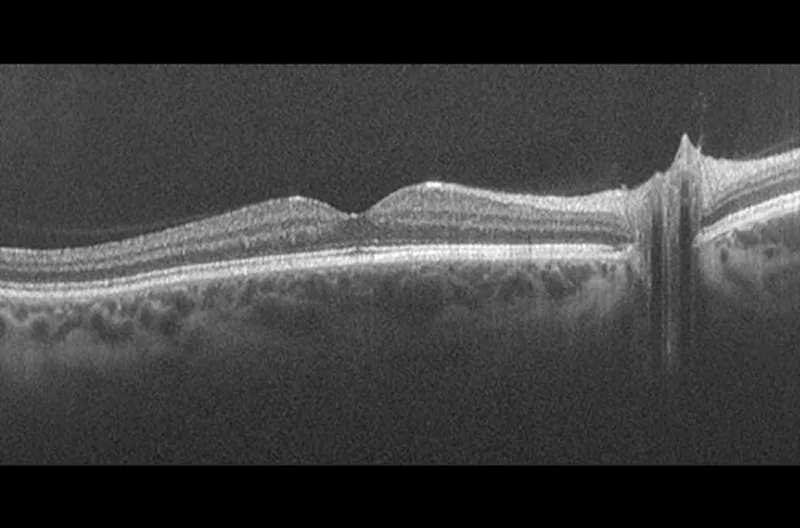
Optical Coherence Tomography (OCT) allows us to not only look at the surface of the retina, but also the layers underneath, much like an MRI. This allows us the possibility to detect the early signs of a range of diseases and conditions, including macular degeneration and glaucoma, even before you may have any symptoms.
No eye drops are used, dilation of your pupils is not required. The information gathered during your OCT scan is used in conjunction with your digital retinal photographs and the scan will be started moments after your images are completed. The scan requires you to look through a view finder while you observe a red line of light moving across the screen. Your images are captured and include many multi-layered scans of different levels of the back of your eye – the retina.